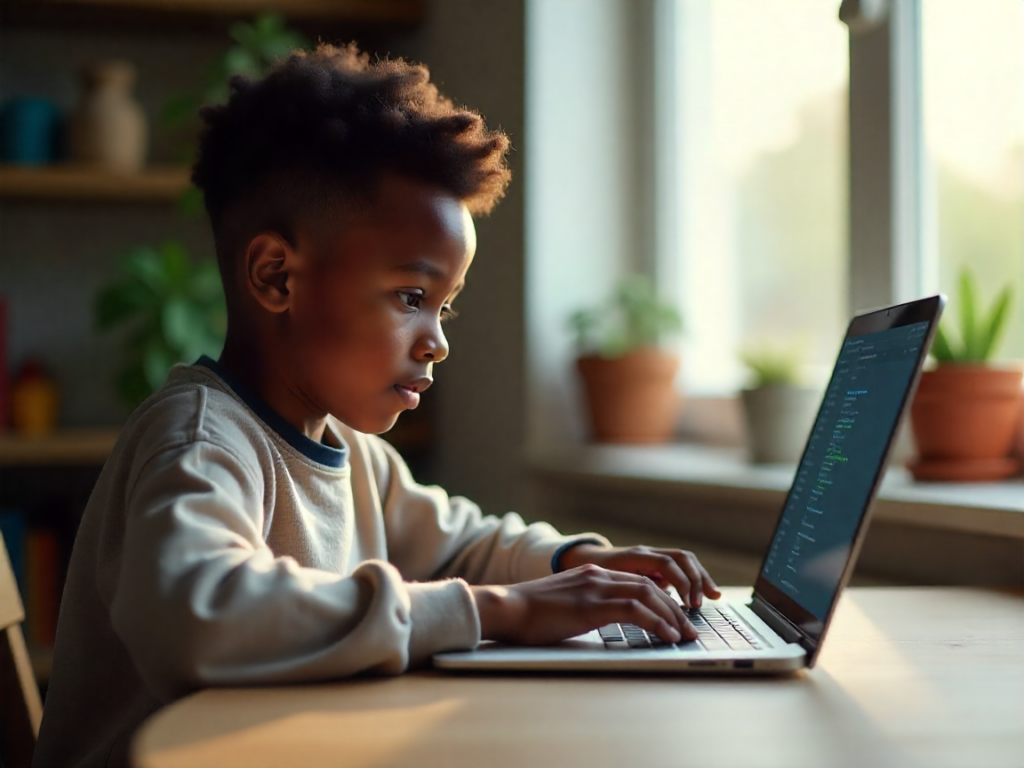
Children today are growing up in a world surrounded by technology.
They use smartphones, tablets, computers, gaming devices, websites, apps, and artificial intelligence tools almost every day. Technology has become a natural part of how they learn, communicate, play, and interact with the world around them.
Yet despite this increased exposure to technology, many children are only experiencing one side of the digital world.
They are consuming technology.
They watch videos.
They play games.
They browse websites.
They use applications created by others.
While there is nothing inherently wrong with these activities, I believe every child deserves the opportunity to go beyond consumption and discover the power of creation.
The Difference Between Consumers and Creators
Consumers use technology.
Creators build technology.
Consumers play games.
Creators design games.
Consumers browse websites.
Creators develop websites.
Consumers use mobile apps.
Creators build mobile apps.
The difference is not intelligence or talent.
The difference is exposure, opportunity, and education.
When children are introduced to technology education, they begin to realise that the digital tools they use every day were created by people just like them.
This realisation can be life-changing.
Technology Education Builds Confidence
One of the most rewarding experiences as an educator is watching a child build something they never thought was possible.
Whether it is a simple animation, a website, a mobile application, or a game, the process of creating something from scratch builds confidence.
Children begin to understand that they are capable of more than they imagined.
Instead of asking, “Can I do this?”
They begin asking, “What else can I create?”
That shift in mindset often extends far beyond technology.
Creativity Meets Problem-Solving
Technology education is often misunderstood as simply learning technical skills.
In reality, it combines creativity and problem-solving in powerful ways.
Children learn how to:
- Think critically
- Analyze challenges
- Test ideas
- Improve solutions
- Work collaboratively
- Express creativity
These skills are valuable regardless of the career path they eventually choose.
Preparing Children for Future Opportunities
The world is changing rapidly.
Artificial Intelligence, Robotics, Automation, Data Science, and other emerging technologies are creating new industries and transforming existing ones.
Many of the careers that today’s children will pursue have not yet been invented.
This is why future-ready skills matter.
Technology education helps children develop adaptability, curiosity, and lifelong learning habits that will serve them well regardless of how the future evolves.
Beyond Coding
When people hear technology education, they often think only about coding.
Coding is important, but it is only one piece of a much larger picture.
Technology education can expose children to:
- Artificial Intelligence
- Robotics
- Game Development
- Digital Design
- Mobile App Development
- Website Development
- Digital Literacy
- Entrepreneurship
- Innovation
These experiences help children explore possibilities and discover their interests.
The Importance of Early Exposure
Many successful innovators were introduced to technology at a young age.
Early exposure allows children to experiment, explore, make mistakes, and develop confidence over time.
More importantly, it helps them see technology as something they can create rather than something they can only consume.
Every child may not become a software engineer.
Every child may not start a technology company.
But every child can benefit from understanding how technology works and how it can be used to solve problems.
Creating the Next Generation of Innovators
The future will belong to individuals who can think creatively, solve problems, adapt to change, and leverage technology effectively.
Our responsibility as parents, educators, and mentors is to provide children with opportunities to develop these abilities.
Technology education is not just about preparing children for jobs.
It is about preparing them for life.
It is about helping them become confident creators, innovative thinkers, and active contributors to society.
When children move from simply consuming technology to creating with it, they begin to see the world differently.
They stop asking what technology can do for them.
They start asking what they can do with technology.
And that is where transformation truly begins.